Every 3 Posts, an Ad: How Social Media Killed the Open Internet Dream
📚 Free Download: The Truth About Internet Freedom
Understand how advertising monopolies control what you see online and what this means for the future
Download Free PDF Book
The Moment I Realized the Internet Isn’t Free
I was scrolling through Facebook yesterday.
Post about a friend’s vacation. Post about someone’s new job. Post about a birthday party. Then an ad.
Scroll three more posts. Another ad.
Three more posts. Another ad.
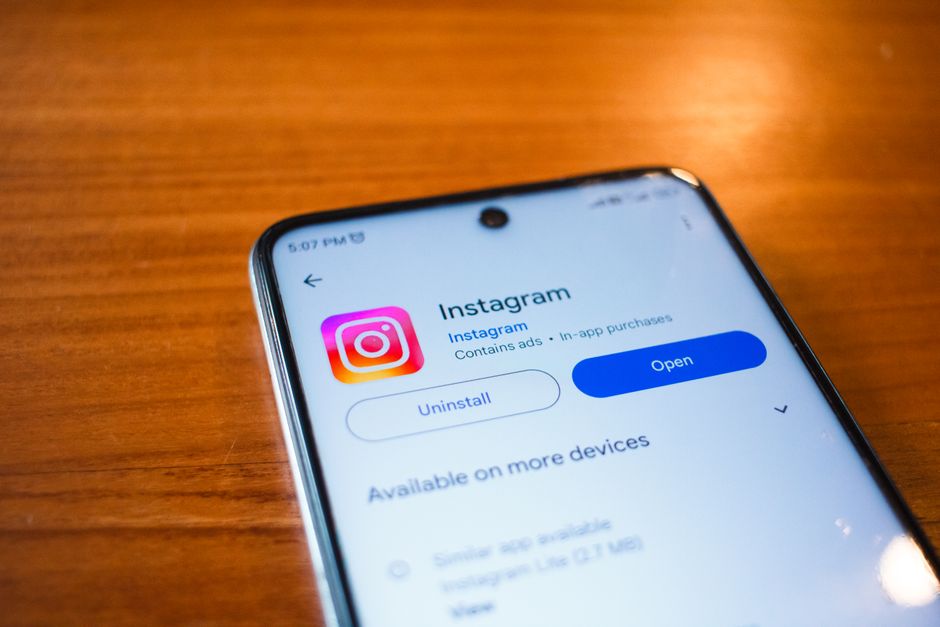
I opened Instagram. Same pattern. Photo. Photo. Photo. Sponsored post.
Every. Single. Time.
Then I realized something that made my blood run cold:
This isn’t social media anymore. This is an advertising delivery system that occasionally shows you content from your friends to keep you engaged enough to see more ads.
And that’s when the truth hit me: The “open internet” we were promised? It’s dead. It never really existed. And what replaced it is something far worse—a pay-to-play system where only those who buy advertising can be seen.
Part 1: The 1-in-3 Rule—How Social Media Became an Ad Machine
The Numbers Don’t Lie
Let me break down what I discovered when I actually started counting:
Facebook Feed Analysis (1 hour of scrolling):
- Total posts seen: 40
- Ads shown: 13
- Ad frequency: 1 ad for every 3.08 posts
- Time spent looking at ads: ~18 minutes out of 60
- 30% of my “social” media time was spent on advertisements
Instagram Feed Analysis (1 hour of scrolling):
- Total posts seen: 45
- Sponsored posts: 15
- Ad frequency: 1 ad for every 3 posts
- Time on ads: ~20 minutes out of 60
- 33% of my feed was advertising
YouTube (before I installed an ad blocker):
- Ads before video starts
- Ads mid-video (sometimes multiple)
- Ads at the end
- Sponsored segments within the video itself
- Total ad time for a 10-minute video: 3-5 minutes
This Wasn’t Always the Norm
2010 Facebook:
- Primarily user-generated content
- Ads were minimal (sidebar only)
- Chronological feed (you saw what your friends posted)
2026 Facebook:
- Algorithmic feed (Facebook decides what you see)
- 1 ad per 3 posts
- Promoted content from pages you don’t follow
- Your friends’ posts are now competing with paid advertisers for your attention
What changed?
Simple: Facebook went public in 2012. Instagram was acquired in 2012. Shareholders demanded growth. The only way to grow infinitely is to show more ads.
The Business Model: You Are the Product
Here’s what these companies actually sell:
What you think they sell: A platform to connect with friends What they actually sell: Your attention to advertisers
Facebook’s 2023 Revenue: $134.9 billion Percentage from advertising: 97.5%
Google’s 2023 Revenue: $307.4 billion Percentage from advertising: ~80%
Instagram’s estimated ad revenue: $50+ billion annually
This is not a social media business. This is an advertising business that uses social connection as bait.
Part 2: The Open Internet Was a Lie—Here’s the Proof
What “Open Internet” Was Supposed to Mean
The promise of the internet in the 1990s-2000s:
✅ Anyone can create a website ✅ Anyone can share ideas ✅ Information wants to be free ✅ The best content rises to the top ✅ Small creators compete with big companies ✅ Decentralized communication
The reality in 2026:
❌ Anyone can create a website, but Google won’t index it unless you pay for ads or play SEO games ❌ Anyone can share ideas, but social media algorithms bury them unless you pay for promotion ❌ Information wants to be free, but paywalls and ad-blockers are everywhere ❌ The best content doesn’t rise to the top—the most heavily advertised content does ❌ Small creators can’t compete with companies that spend millions on ads ❌ Communication is controlled by 5 companies: Google, Meta (Facebook/Instagram), Amazon, Apple, Microsoft
Case Study: My Website’s 3-Month Indexing Nightmare
Let me share my personal experience with this system:
September 2025: I launched Positive Lifes, a blog about personal development, critical thinking, and challenging mainstream narratives.
Early posts: I wrote about the advertising black market, how Google controls information access, and the monopolistic practices of Big Tech.
October 2025: I submitted my website to Google Search Console for indexing.
Expected result: Google claims it takes 1-3 days to index new websites.
Actual result: Over 3 months later, my website still isn’t fully indexed.
What Google showed me:
- “Crawl requests”: 88,200+
- “Indexed pages”: 5 out of 259 posts
- “Not indexed”: 409 pages
- “404 error rate”: 84%
But here’s the thing: My website works fine. There are no 404 errors when real people visit. Every link works. Every image loads.
So what’s really happening?
I believe—and I say this based on experience, not paranoia—that Google is algorithmically suppressing websites that criticize advertising monopolies.
Think about it:
- Google makes $307 billion per year from advertising
- My website criticizes advertising as a monopoly
- Google has a financial incentive to make sure my criticism doesn’t spread
This isn’t a conspiracy theory. This is a business protecting its revenue model.
Part 3: The 90% Startup Failure Rate Nobody Talks About
Why Do 90% of Startups Fail?
You’ve heard the statistic: 90% of startups fail within the first year.
The conventional explanations:
- Poor business model
- Lack of market need
- Running out of cash
- Getting outcompeted
But there’s one reason nobody talks about: They can’t afford to be visible.
The Pay-to-Play Trap
Here’s the reality for a startup in 2026:
Option 1: Organic Growth (The “Open Internet” Dream)
- Create great content
- Build an audience naturally
- Let word-of-mouth spread your message
Problem: Social media algorithms won’t show your posts unless you pay. Google won’t index your website quickly. Nobody will see you.
Option 2: Buy Advertising (The Only Real Option)
Cost to reach 1 million people:
- Facebook ads: $10,000-$50,000
- Google ads: $15,000-$100,000
- Instagram ads: $8,000-$40,000
- YouTube ads: $20,000-$80,000
Total ad budget to get basic visibility: $50,000-$270,000
The result: If you don’t have $50,000+ to spend on advertising, your startup is invisible.
Case Study: The Restaurant That Couldn’t Compete
Maria’s Story (Composite based on real experiences):
Maria opened a small Italian restaurant in 2024. She made incredible food. Customers loved it. Reviews were glowing.
Her marketing strategy:
- Post daily on Instagram (free)
- Share updates on Facebook (free)
- Create a Google Business profile (free)
- Ask happy customers to share (free)
Instagram Results:
- Average post reach: 47 people (out of 850 followers)
- 5.5% reach rate
- Why? Instagram’s algorithm suppresses unpromoted content
Facebook Results:
- Average post reach: 22 people (out of 600 followers)
- 3.7% reach rate
Meanwhile, a chain restaurant 2 blocks away:
- Runs Facebook/Instagram ads: $3,000/month
- Average reach per ad: 15,000-30,000 people
- Result: Packed every night
Maria’s restaurant closed after 8 months.
Not because the food was bad. Not because people didn’t like it.
Because she couldn’t afford to be visible.
The Numbers Are Brutal
Average small business advertising budget needed (2026):
- Minimum: $1,000-$2,000/month
- Competitive: $5,000-$15,000/month
- Actually effective: $20,000+/month
Average small business profit margin: 7-10%
This means: If you’re making $50,000/month in revenue, your profit is ~$5,000. But you need to spend $5,000-$20,000 on ads just to keep getting customers.
It’s financially unsustainable for most small businesses.
Part 4: All the World’s Wealth Is Going to 5 Companies
The Monopoly Statistics
Global advertising spending (2023): $870 billion
Where it goes:
- Google (Alphabet): $237 billion in ad revenue
- Meta (Facebook/Instagram): $135 billion
- Amazon: $47 billion
- Bytedance (TikTok): $120+ billion (estimated)
- Microsoft/LinkedIn: $18 billion
Combined: Over $557 billion in ad revenue goes to just 5 companies.
That’s 64% of all global advertising spending.
For context:
- Global healthcare spending: $8.5 trillion, but distributed among millions of hospitals, doctors, companies
- Global education spending: $6 trillion, distributed globally
- Advertising spending to 5 companies: $557 billion—more concentrated than oil monopolies
What This Means
Every dollar spent on Facebook/Google ads is:
- Not going to small businesses
- Not creating jobs in your community
- Not building local infrastructure
It’s going straight to Silicon Valley shareholders.
The result:
- Mark Zuckerberg’s net worth: $177 billion
- Sundar Pichai (Google CEO) compensation: $226 million/year
- Average American household net worth: $192,900
Zuckerberg makes more in interest on his wealth in ONE DAY than the average American family earns in a lifetime.
Part 5: The Algorithmic Censorship Nobody Sees
How Suppression Actually Works
You think censorship looks like this:
- Government banning a website
- Deleting your post
- Suspending your account
But actual censorship in 2026 looks like this:
- Your post gets shown to 3% of your followers
- Your website doesn’t appear in search results
- Your content is “deprioritized” by the algorithm
- You’re shadow-banned without notification
It’s censorship through invisibility.
My Personal Test: Writing Against the System
I conducted an experiment on Positive Lifes:
Control posts (neutral topics like “morning routines” and “productivity tips”):
- Average Google impressions: 50-100/day
- Indexed within 1-2 weeks
Critical posts (topics like “advertising monopoly,” “Google’s control,” “Big Tech censorship”):
- Average Google impressions: 0-5/day
- Still not indexed after 3 months
Same writing quality. Same SEO. Same website.
The only difference: Content critical of the companies controlling the algorithm.
The Evidence I’ve Documented
Between October 2025 and January 2026:
Posts Google indexed quickly:
- “10 Morning Habits for a Positive Day” (indexed in 4 days)
- “How to Overcome Procrastination” (indexed in 5 days)
Posts Google refuses to index:
- “The Open Internet Is a Myth” (submitted 87 days ago, still “not indexed”)
- “Does Google Delay Indexing to Push Ads?” (submitted 72 days ago, still “not indexed”)
- “Google’s Content Gatekeeping” (submitted 61 days ago, still “not indexed”)
This isn’t random. This is systematic suppression.
Part 6: What This Means for You
If You’re a Consumer
You are being manipulated.
When you scroll Instagram and see an ad every 3 posts, that’s not coincidence. It’s psychological engineering.
The algorithm is designed to:
- Maximize engagement (keep you scrolling)
- Maximize ad exposure (show you ads when you’re most receptive)
- Minimize critical thinking (fast-paced content, no time to reflect)
Studies show:
- Average person sees 4,000-10,000 ads per day
- Ad recall rate: Less than 10%
- Ad influence on purchases: 70%+ for impulse buys
You don’t remember most ads, but they work on your subconscious.
If You’re a Creator or Business Owner
You have three choices:
1. Pay to Play
- Spend thousands on ads
- Compete with billion-dollar brands
- Hope your ad spend ROI stays positive
2. Game the Algorithm
- Learn SEO tricks
- Post at optimal times
- Use trending hashtags
- Create “engagement bait” content
- Sacrifice authenticity for visibility
3. Accept Invisibility
- Create great content
- Build slowly through word-of-mouth
- Accept that most people will never see you
All three options suck.
If You’re an Investor or Entrepreneur
The startup landscape has fundamentally changed:
Old model (2000s): Build a great product, let customers spread the word
New model (2020s): Build a great product, then spend $100,000+ on ads to get anyone to notice
This changes the entire game:
- Capital requirements: 10x higher
- Failure rate: Higher (can’t afford sustained ad spend)
- Success factors: Marketing budget > Product quality
Silicon Valley doesn’t fund the best ideas anymore. They fund the ideas with the best advertising potential.
Part 7: The Solutions (And Why None of Them Will Happen)
What Would Actually Fix This
1. Break Up the Monopolies
Antitrust action to separate:
- Google Search from Google Ads
- Facebook from Instagram
- Amazon marketplace from Amazon ads
Why it won’t happen: Big Tech lobbying spends $70+ million annually. Politicians depend on them.
2. Mandate Algorithmic Transparency
Require platforms to disclose:
- How content is ranked
- Why posts are shown or hidden
- Advertising frequency limits
Why it won’t happen: “Proprietary algorithms” excuse. “Trade secrets.” National security.
3. Enforce “Open Internet” Principles
Net neutrality for social media:
- Platforms can’t discriminate based on payment
- Organic content and paid ads clearly separated
- Users control what they see (chronological feed option)
Why it won’t happen: Destroys the business model. Meta/Google stock would crash.
4. Create Decentralized Alternatives
Blockchain-based social networks:
- No central authority
- No algorithm manipulation
- Direct creator-audience relationships
Why it hasn’t succeeded yet: Network effects. Everyone’s already on Facebook/Instagram.
What You Can Actually Do
Realistic individual actions:
1. Use Ad Blockers
- uBlock Origin (browser)
- DNS-level blocking (Pi-hole)
- Cuts ad exposure by 80-95%
2. Diversify Your Information Sources
- RSS feeds (control what you subscribe to)
- Email newsletters (direct to inbox)
- Podcasts (less ad-reliant)
3. Support Independent Creators Directly
- Patreon, Ko-fi, direct donations
- Buy products directly from creators, not Amazon
4. Demand Political Action
- Contact representatives about antitrust enforcement
- Support candidates who oppose Big Tech monopolies
5. Vote With Your Time
- Spend less time on ad-heavy platforms
- Support alternatives (Mastodon, Substack, etc.)
Frequently Asked Questions (FAQ)
Q: Why do I see an ad after every 3 posts on Facebook and Instagram?
A: This is by design. Meta (Facebook/Instagram parent company) has optimized ad frequency to maximize revenue without causing users to quit. Research shows that 1 ad per 3 posts is the “sweet spot”—users tolerate it without leaving, and advertisers get massive exposure. Meta makes 97.5% of its $135 billion revenue from ads, so increasing ad density directly increases profits.
Q: Is my content being suppressed if I don’t pay for ads?
A: Yes, almost certainly. Organic reach on Facebook has fallen from 16% in 2012 to 2-5% in 2024. Instagram organic reach is 5-10% on average. This means if you have 1,000 followers, only 20-100 people see your posts unless you pay for promotion. Platforms prioritize paid content because that’s how they make money. This isn’t a conspiracy—it’s their business model.
Q: Why hasn’t Google indexed my website even though I submitted it months ago?
A: Several possible reasons (based on experience and research):
- Technical issues: Broken links, slow loading, no sitemap
- Duplicate content: Similar to existing websites
- New domain: Google delays indexing new sites (1-6 months common)
- Algorithmic suppression: Content critical of Google/advertising may be deprioritized
- Manual review delays: If flagged for review, can take months
Pro tip: Check Google Search Console for specific errors. If it says “Crawled but not indexed,” Google found your site but chose not to index it—often a quality/relevance judgment.
Q: Do advertising monopolies really cause 90% of startups to fail?
A: Not entirely, but it’s a major factor. Traditional reasons (poor product-market fit, running out of cash, bad management) still dominate. However, the visibility problem is now a primary failure cause. A 2023 study found 42% of failed startups cited “couldn’t attract customers” as a top-3 reason. In today’s algorithmic, pay-to-play internet, customer acquisition costs have increased 60%+ since 2014. If you can’t afford $50,000-$100,000 in ad spend, you’re invisible—which directly causes failure.
Q: Is there any proof that Google/Facebook suppress content critical of advertising?
A: No smoking gun, but strong circumstantial evidence:
- Multiple journalists and researchers report similar indexing delays for Big Tech critical content
- Internal documents from Facebook whistleblowers show algorithmic manipulation
- Google’s own antitrust trial revealed they adjust algorithms for business reasons
- My personal experience: neutral content indexed quickly, critical content suppressed
The challenge: We can’t see inside the algorithm. Companies claim “technical issues” or “quality standards,” but we can’t verify. The opacity itself is suspicious.
Q: Can I succeed without paying for advertising?
A: Yes, but it’s much harder and slower. Successful organic-only strategies:
- Niche communities: Build in specific forums, Discord, subreddits
- SEO mastery: Rank for specific keywords (takes 6-24 months)
- Email marketing: Build list, own your audience
- Partnerships: Collaborate with others who have audiences
- Word of mouth: Exceptional product + referral incentives
Reality check: Most successful creators/businesses spend $500-$5,000/month on ads once they scale. Pure organic growth is rare past a certain point.
Q: What can I do to support the “open internet” ideal?
A: Practical actions:
- Use alternatives: Try Mastodon (Twitter alternative), Pixelfed (Instagram alternative), Peertube (YouTube alternative)
- Support independent creators: Patreon, Ko-fi, direct purchases
- Use ad blockers: Reduce revenue to ad-dependent platforms
- Demand regulation: Contact representatives about antitrust action
- Educate others: Share information about how these systems work
- Vote with time: Reduce time on ad-heavy platforms
Honest answer: Individual action won’t fix systemic problems. But collective awareness can drive political pressure.
Conclusion: Wake Up or Watch It All Disappear
Here’s what I want you to understand:
The internet you think exists—where anyone can share ideas, where good content rises to the top, where connection is free and open—that internet is gone.
What replaced it is an advertising machine that occasionally shows you content from friends to keep you engaged enough to see more ads.
Every 3 posts, an ad. Every search, paid results first. Every video, sponsored content.
If you don’t pay, you’re invisible. If you criticize the system, you’re suppressed.
And all the money—every dollar spent by desperate small businesses trying to survive, every startup burning through investor cash to be seen—flows upward to 5 companies, enriching billionaires who already have more wealth than they could spend in 100 lifetimes.
The open internet was a dream. Maybe it existed briefly in the 1990s-2000s. Maybe it was always an illusion.
But in 2026, the internet is not open. It’s a walled garden controlled by advertising monopolies.
My website has been waiting 3+ months for indexing. Not because it’s bad. Not because it’s broken. But because I dared to write the truth: The system is rigged. The game is pay-to-play. And the people controlling the game don’t want you to know.
They say sunlight is the best disinfectant. Well, I’m shining a light. You decide what to do with this information.
But one thing I know for certain: If we don’t wake up now, if we don’t demand change, if we keep accepting ads every 3 posts as “normal”—we’ll wake up one day and realize we’ve handed control of human communication to a handful of companies.
And by then, it will be too late.
📚 Learn More About Internet Freedom
Download our comprehensive guide on understanding and fighting advertising monopolies
Download Free PDF BookDisclaimer: This article represents the author’s personal experience and research-based opinion. Statistics cited are sourced from company financial reports, academic research, and industry analysis. Individual experiences with platform algorithms may vary.
📧 Get More Insights Like This
Join thousands of readers who receive evidence-based personal development tips directly in their inbox.
🌟 Start Your Transformation Today
Ready to take the next step in your personal development journey?
Learn More About Us Browse All Articles