
Parts of the Human Brain and Their Functions Explained
The Brain: Your Body’s Most Powerful Organ
Ever wondered why some people seem to naturally focus better than others? Or how you can remember a song from childhood but forget what you had for lunch yesterday? The answer lies in understanding how your brain actually works. Your brain contains roughly 86 billion neurons, each making thousands of connections with other neurons. These tiny connections control everything from your heartbeat to your emotions, from your memory to your dreams. In this guide, we’re breaking down the brain into understandable parts so you can understand the incredible machine between your ears.
Here are your key takeaways: You’ll learn the four major brain regions and what they do, discover how these parts work together seamlessly, understand why your brain is more flexible than you think, and gain practical strategies to optimize your brain health starting today.
Why Understanding Your Brain Matters
Let’s be honest: most of us don’t give our brains much thought until something goes wrong. But here’s the thing—understanding your brain anatomy isn’t just for neuroscientists or medical students. It’s for anyone who wants to live a healthier, more productive life.
When you understand how your brain works, you can make better decisions about your health. You’ll understand why sleep is non-negotiable, why stress management matters, and why learning new things keeps you young. You’ll also dispel some common myths that have been holding you back.
Common brain myths you might believe:
- “We only use 10% of our brains” (False—we use virtually all of it)
- “The brain stops developing after childhood” (False—neuroplasticity means it keeps changing)
- “IQ is fixed and can’t improve” (False—you can literally rewire your neural pathways)
- “Damage to the brain is always permanent” (False—the brain has remarkable recovery abilities)
Understanding your brain means taking control of your cognitive destiny.
The Four Major Parts of Your Brain: A Complete Guide
Your brain has several key components, each with specific responsibilities. Let’s explore them:
1. The Cerebrum: Your Brain’s Command Center
The cerebrum is the largest part of your brain, making up about 80% of your brain’s total weight. It’s divided into two hemispheres connected by a bundle of fibers called the corpus callosum.
Key functions of the cerebrum:
- Executive functions: Decision-making, planning, and problem-solving happen here in the prefrontal cortex
- Language processing: Both understanding and producing language
- Movement control: Motor cortex initiates all voluntary movements
- Sensory processing: Touch, vision, hearing, taste, and smell all process here
- Emotions and personality: Your unique personality lives in the cerebrum
- Memory formation: Working memory and long-term memory creation
The cerebrum has four main lobes:
- Frontal lobe: Handles executive function, personality, and movement
- Parietal lobe: Processes touch, temperature, and pain signals
- Temporal lobe: Manages memory, emotion, and hearing
- Occipital lobe: The visual processing center of your brain
2. The Cerebellum: Your Body’s Coordinator
Don’t let the name fool you—the cerebellum (which means “little brain”) is incredibly important. While it makes up only about 10% of your brain’s volume, it contains about 50% of your brain’s neurons.
What the cerebellum does:
- Balance and coordination: Keeps you from falling over when you walk
- Motor learning: Helps you learn complex movements like playing an instrument or typing
- Fine motor control: Enables precise hand movements and facial expressions
- Timing and rhythm: Helps coordinate movements in time and space
- Cognitive functions: Recent research shows it plays a role in attention and language processing
This is why you can ride a bike without thinking about it—your cerebellum has learned and automated the process.
3. The Brainstem: Your Survival System
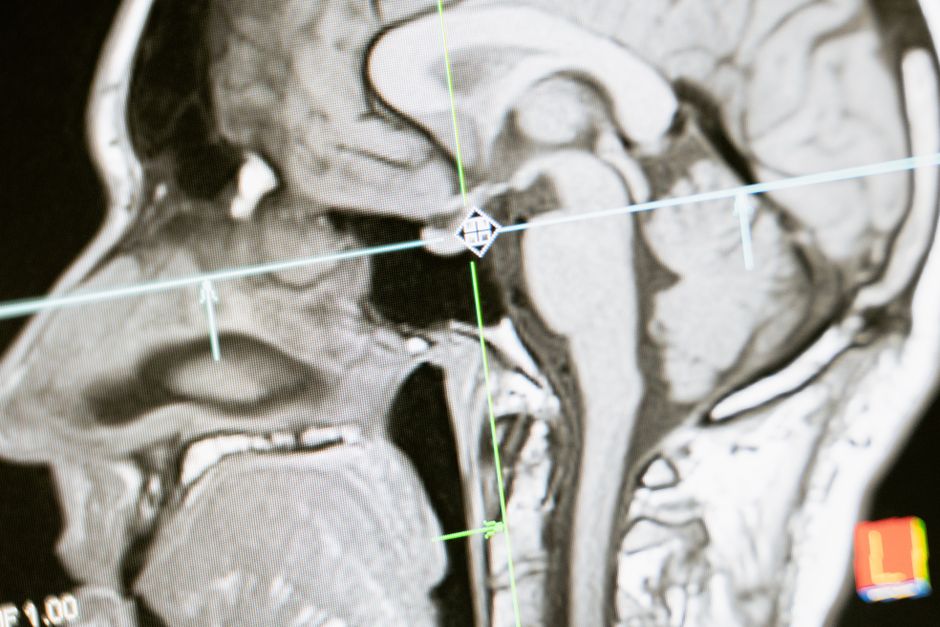
The brainstem sits at the base of your brain where it connects to your spinal cord. Though small, it’s absolutely critical for survival. Without it, your body couldn’t maintain basic functions.
Critical functions of the brainstem:
- Breathing: Controls automatic respiration
- Heartbeat: Maintains your heart rhythm
- Blood pressure: Regulates circulation
- Sleep-wake cycles: Controls circadian rhythms
- Digestion: Manages stomach and intestinal functions
- Pain and temperature: Processes these basic sensations
The brainstem contains three main parts:
- Midbrain: Relays information between the brain and spinal cord
- Pons: Connects the cerebrum to the cerebellum
- Medulla: Handles vital life functions like breathing and heart rate
4. The Limbic System: Your Emotional Brain
The limbic system is a group of interconnected structures that work together to process emotions, motivation, and memory. It’s sometimes called the “emotional brain” because it’s where feelings originate.
Key structures and their functions:
- Hippocampus: Converts short-term memories into long-term memories. Damage here affects memory formation
- Amygdala: Processes emotional responses, especially fear and anxiety. It’s your brain’s threat detector
- Hypothalamus: Produces hormones that regulate hunger, thirst, sleep, and stress responses
- Thalamus: Acts as a relay station, sending sensory information to the cortex
- Pituitary gland: The “master gland” that controls hormonal balance throughout your body
The limbic system is why your body goes into fight-or-flight when you encounter danger, why you crave food when stressed, and why emotional memories are so vivid.
How These Parts Work Together
Here’s where it gets really interesting: your brain parts don’t work in isolation. They’re constantly communicating through neural pathways and chemical messengers called neurotransmitters.

When you encounter a stressful situation:
- Your senses alert the thalamus to incoming threat information
- The amygdala processes the emotional significance
- Your prefrontal cortex evaluates the actual danger level
- Your hypothalamus releases stress hormones
- Your cerebellum prepares your body for quick movement
This whole process happens in milliseconds, showing just how integrated your brain really is.
5 Proven Ways to Optimize Your Brain Health
Understanding your brain is great, but what really matters is what you do with that knowledge. Here are five evidence-based strategies to keep your brain in peak condition:
1. Move Your Body Regularly
Exercise is perhaps the single best thing you can do for your brain. Physical activity increases blood flow to the brain, promotes the growth of new neurons (neurogenesis), and strengthens neural connections. Aim for at least 150 minutes of moderate exercise per week. Your cerebellum loves this because it’s constantly learning new movement patterns, which keeps it sharp. Studies show that people who exercise regularly have larger hippocampi and better memory retention. Even better, you don’t need to run marathons—brisk walking, swimming, cycling, or dancing all count. The key is getting your heart rate up and making it consistent.
2. Prioritize Sleep Like Your Life Depends On It
During sleep, your brain consolidates memories, clears out metabolic waste through the glymphatic system, and restores neurotransmitter balance. Most adults need 7-9 hours. Without adequate sleep, your prefrontal cortex can’t function properly, your amygdala becomes overactive, and your ability to regulate emotions plummets.
3. Engage in Continuous Learning
Learning new skills literally changes your brain structure. Whether it’s learning a language, mastering an instrument, or studying a new subject, neuroplasticity means your brain is rewiring itself. This is especially important as you age—it keeps your cerebrum young. Research shows that bilingual people have improved cognitive flexibility and better executive function because their brains are constantly switching between language systems. The beauty of this brain hack is that it doesn’t matter what you learn—your brain benefits from the challenge itself. Puzzles, courses, books, or new hobbies all work equally well.
4. Eat Brain-Supporting Foods
Your brain needs fuel. Focus on omega-3 fatty acids (fish), antioxidants (berries), and B vitamins (leafy greens). These nutrients support neurotransmitter production and protect neurons from oxidative stress. Your hippocampus especially benefits from a healthy diet, which supports memory function. The Mediterranean diet has been extensively studied and shown to slow cognitive decline and reduce dementia risk. Dark chocolate, nuts, whole grains, and coffee are all brain-boosting foods with scientific backing. Aim to limit sugar and processed foods, which promote inflammation and can damage neural connections over time.
5. Manage Stress Effectively
Chronic stress damages the hippocampus and shrinks the prefrontal cortex while enlarging the amygdala. Practice stress management through meditation, deep breathing, journaling, or whatever works for you. Even 10 minutes of daily mindfulness can reduce amygdala reactivity. The stress hormone cortisol, when constantly elevated, literally kills neurons and prevents new ones from forming. This is why stressed people often feel foggy and forgetful. Find what calms your nervous system—it might be yoga, time in nature, creative pursuits, or social connection. The key is consistency rather than perfection.
Common Challenges You Might Face
“I’m not a neuroscientist—why should I care?”
You don’t need a degree to benefit from understanding your brain. Think of it like car maintenance—you don’t need to be a mechanic to understand that oil changes matter. Basic brain knowledge helps you make better decisions about your health every single day.
“My brain is fixed—I can’t change it”
Wrong. Neuroplasticity—your brain’s ability to rewire itself—is one of the most exciting discoveries in neuroscience. Your brain is constantly changing based on your experiences, behaviors, and thoughts. You’re literally rewriting your neural pathways right now.
“I’m too old to improve my brain”
The brain remains plastic throughout life. Yes, neurogenesis slows with age, but it never stops. Older adults who engage in learning, physical activity, and social connection maintain cognitive sharpness far better than sedentary peers.
“I don’t have time for brain optimization”
You don’t need to overhaul your life. Small changes compound. A 20-minute walk, one extra hour of sleep, or learning one new word a day all add up to significant brain health improvements over time.
What You’ll Discover in Our Brain Guide PDF
We’ve created a comprehensive guide that goes deeper into each brain structure and system. The PDF includes detailed anatomical illustrations showing exactly where each brain part sits, diagrams showing how information flows through your brain, and practical recommendations for optimizing each system.
Download your free Brain Anatomy Guide PDF here—it’s perfect for visual learners who want a quick reference guide.
This guide is designed for:
- Students studying anatomy or neuroscience
- Healthcare professionals needing a refresher
- Anyone curious about how their brain works
- People looking to optimize their cognitive health
- Parents wanting to understand their child’s developing brain
Whether you’re 15 or 75, understanding your brain empowers you to take better care of it.
Your Brain: The Greatest Mystery
The brain is simultaneously one of the most studied organs and one of the greatest mysteries in science. We know more about outer space than we know about what’s happening in our own heads. But what we do know is remarkable: your brain is constantly changing, endlessly capable, and far more powerful than you probably realize.
The brain parts we’ve discussed—the commanding cerebrum, the coordinating cerebellum, the vital brainstem, and the emotional limbic system—work together in an incomprehensibly complex dance to create everything you think, feel, and do.
Get your free detailed Brain Anatomy & Functions PDF guide now and take the first step toward truly understanding yourself.
Now we want to hear from you: Which brain system fascinates you the most? Are you more interested in memory, emotions, movement, or executive function? Share your thoughts in the comments below—your engagement helps us create content that truly resonates with you.
📧 Get More Insights Like This
Join thousands of readers who receive evidence-based personal development tips directly in their inbox.
🌟 Start Your Transformation Today
Ready to take the next step in your personal development journey?
Learn More About Us Browse All Articles