If There Is One Owner of Everything, Then Who Is It?
If There Is One Owner of Everything, Then Who Is It?
The question of ultimate ownership stands as one of humanity’s most profound philosophical and theological inquiries. “If there is one owner of everything, then who is it?” This question assumes a fundamental premise: that ownership, in some ultimate sense, must exist. But what does ownership truly mean in the context of the entire universe? Different belief systems, philosophical traditions, and worldviews offer radically different answers to this eternally relevant question.
The Concept of Ultimate Ownership
What Does Ownership Mean Cosmically?
Before we can answer who owns everything, we must first understand what “ownership of everything” actually means:
In legal terms, ownership implies:
- The right to use, control, and dispose of something
- Responsibility for its care and management
- Authority over its fate and future
In cosmic terms, ultimate ownership might mean:
- Creative authority — the power to bring existence into being
- Sustaining force — the power that maintains existence
- Ultimate purpose — determining the direction and meaning of all things
- Absolute knowledge — understanding everything completely
Monotheistic Religions: One Supreme Creator
Judaism, Christianity, and Islam
The three major Abrahamic religions share a foundational belief: that one God is the ultimate owner and creator of everything.
In Judaism:
- YHWH (Yahweh) is conceived as the supreme, transcendent God
- Creation narrative: God creates the heavens, earth, and all life
- Covenant emphasizes humanity’s stewardship, not ownership
- The Psalms declare: “The Earth is the Lord’s and all it contains”
- Humans are guardians, not proprietors
In Christianity:
- God the Father created all things through Christ
- Creation is described as “good” and reflects divine wisdom
- Humans are created in God’s image, but ownership remains divine
- Stewardship theology emphasizes human responsibility without ownership
- Redemption narrative centers on God’s sovereign plan for all creation
In Islam:
- Allah is the supreme Creator and Owner of all existence
- The Quran emphasizes: “To Allah belongs whatever is in the heavens and the earth”
- Human ownership is temporary and conditional
- Khalifah (stewardship) is humanity’s role, not ownership
- All wealth and property ultimately belong to Allah
Key insight: These traditions agree that ultimate ownership belongs to one transcendent God, while humans hold temporary stewardship.
Hinduism: Brahman and Divine Reality
The Ultimate Reality
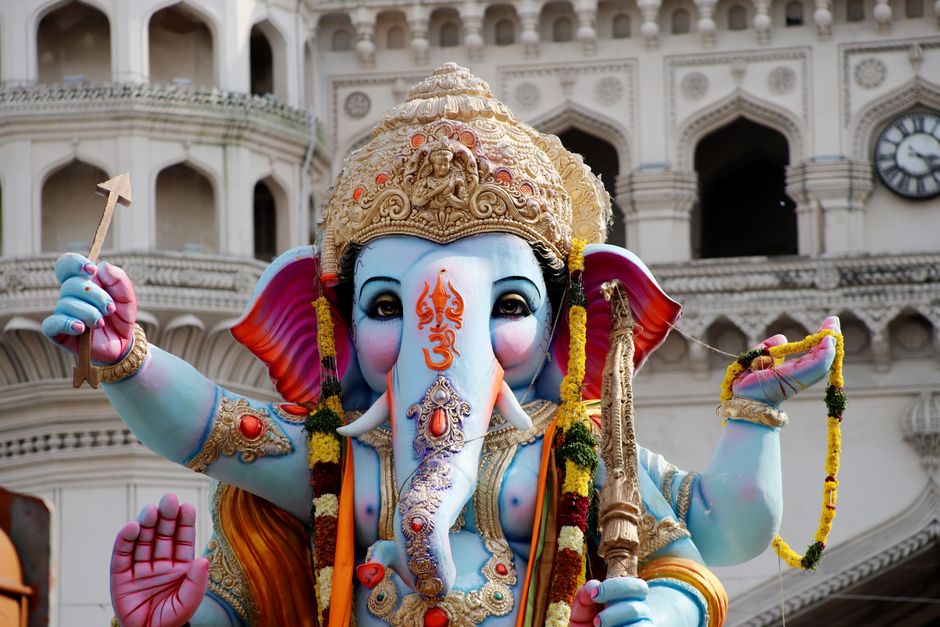
Hinduism offers a sophisticated metaphysical answer through the concept of Brahman:
Brahman as Ultimate Owner:
- Brahman is the ultimate, unchanging reality at the heart of existence
- It is the source and essence of everything
- Not a personal god, but consciousness itself that pervades all
- Often described as “Sat-Chit-Ananda” (being-consciousness-bliss)
The Relationship:
- All individual selves (Atman) are manifestations of Brahman
- The distinction between owner and owned dissolves in this view
- Advaita Vedanta teaches non-dualism: there is ultimately only Brahman
- Brahman doesn’t “own” in the sense of possession — Brahman IS everything
Practical implications:
- Maya (illusion) creates the appearance of separation and ownership
- Liberation (moksha) comes from realizing your identity with Brahman
- The concept of separate ownership is ultimately illusory
Pantheism: The Divine Permeates All
Everything Is Divine
Pantheism proposes a radical answer: everything is divine.
Core principles:
- God and the universe are identical
- The divine is immanent throughout all creation
- Not personal gods, but an all-encompassing divine force
- Often associated with nature mysticism and philosophical spirituality
Notable pantheists:
- Spinoza argued that “God or Nature” (Deus sive Natura) are one
- Schopenhauer saw the will as the fundamental reality
- Emerson and Thoreau found divinity in nature
- Deep ecology modern pantheism emphasizes cosmic interdependence
The ownership question:
- If everything is divine, then ownership is meaningless
- There is no separate owner and owned
- Everything “owns” everything because all is one
Buddhist Perspective: No Ultimate Owner
Emptiness and Interdependence
Buddhism offers yet another perspective, challenging the very concept of ownership:
Key Buddhist concepts:
- Anatman (no self): There is no permanent, unchanging self that can own things
- Sunyata (emptiness): All phenomena lack independent, intrinsic nature
- Dependent origination: Everything arises in dependence on causes and conditions
- No permanent owner is possible because nothing is permanent
Practical implications:
- Attachment to ownership causes suffering
- Liberation comes from releasing the illusion of possession
- Interdependence replaces the concept of ownership
- Everything belongs to the web of existence
Secular and Philosophical Perspectives
Naturalism and Physicalism

From a secular materialist viewpoint:
Physical universe perspective:
- No conscious owner exists
- Ownership is a human legal and social construct
- Physical matter follows laws of physics, not ownership
- The universe simply exists without conscious creator or owner
- Matter and energy transform according to natural law
Property Rights and Social Contract
In secular philosophy, ownership is understood through:
- Legal frameworks that define property rights
- Social contracts that establish who owns what
- Economic systems that distribute resources
- Human convention — ownership is invented by societies
- Possession and use are practical realities, not cosmic truths
Existential Perspective
Existentialists might argue:
- The question of cosmic ownership is ultimately unanswerable
- What matters is how we live and create meaning
- We are “condemned to be free” to make our own choices
- Ultimate questions may be unanswerable by nature
The Limits of Ownership Language
Does Ownership Even Apply Cosmically?
Perhaps the fundamental issue is that “ownership” is a human concept that may not scale to the universe:
Ownership requires:
- A distinct owner separate from the owned
- The ability to exclude others
- Control and management authority
- The possibility of transfer or loss
The universe may not fit this framework:
- There may be no separable owner and owned
- Control implies intentionality we can’t assume
- Cosmic reality may transcend the concept entirely
What Major Traditions Agree Upon
Despite their differences, most traditions share:
- Humans are not ultimate owners — we are temporary participants in existence
- We have responsibility — whether to God, Brahman, the universe, or future generations
- Arrogance is dangerous — claiming ultimate ownership leads to harm
- Stewardship matters — how we treat what exists is morally significant
- Mystery remains — ultimate ownership may be beyond full comprehension
Practical Implications: Living With This Question
If God Owns Everything (Monotheism)
- Live with gratitude and humility
- Fulfill your divine purpose
- Care for creation as entrusted to you
If Brahman Is Everything (Hinduism)
- Recognize the divine in all beings
- Work toward liberation and unity consciousness
- Transcend illusions of separation
If All Is Divine (Pantheism)
- Reverence all nature and existence
- Live in harmony with the cosmic whole
- See the sacred in the mundane
If Nothing Has Ultimate Owner (Buddhism)
- Release attachment to possessions
- Live with compassion and interdependence
- Focus on reducing suffering
If Ownership Is Human Convention (Secularism)
- Build just systems of distribution
- Take responsibility for our choices
- Create meaning through human effort and connection
Conclusion: The Ultimate Answer
So who owns everything? The answer depends profoundly on your worldview:
- God owns everything (monotheists)
- Brahman IS everything (Hindus)
- Everything is divine (pantheists)
- Nothing has an owner (Buddhists)
- Ownership is a human construct (secularists)
- The question itself may be flawed (mystics and philosophers)
What unites these perspectives is a recognition that individual human ownership is limited and temporary. Whether ultimate ownership belongs to God, nature, consciousness, or nowhere at all, the practical wisdom is the same: we are stewards of what we encounter, responsible for our choices, and participants in something far greater than ourselves.
The question “Who owns everything?” ultimately reminds us that we don’t — and therein lies both humility and freedom.
📧 Get More Insights Like This
Join thousands of readers who receive evidence-based personal development tips directly in their inbox.
🌟 Start Your Transformation Today
Ready to take the next step in your personal development journey?
Learn More About Us Browse All Articles