
Growth Mindset vs. Fixed Mindset: Key Differences and
Have you ever wondered why some people seem to bounce back from failure while others give up at the first setback? What if I told you that the answer lies not in talent, intelligence, or luck, but in something far more fundamental: your mindset?
Stanford psychologist Carol Dweck spent decades researching human motivation and discovered something revolutionary. Through her groundbreaking studies, she identified two distinct ways people view their abilities: the fixed mindset and the growth mindset. This simple distinction, it turns out, makes all the difference between those who achieve their potential and those who fall short.
In this guide, you’ll discover exactly what separates these two mindsets and, more importantly, how to shift from one to the other. You’ll learn:
- The fundamental differences between fixed and growth mindset thinking patterns
- Why your current beliefs about talent and intelligence might be holding you back
- Practical strategies to develop a growth mindset in every area of your life
- How to overcome the most common obstacles that keep people stuck in fixed thinking
Why Your Mindset Determines Your Success
Here’s a truth that might surprise you: your mindset is more predictive of success than your IQ, your background, or your natural talents.
Think about it. We all know incredibly talented people who never reach their potential. We’ve also seen people with average abilities accomplish extraordinary things. The difference? Their mindset.
A fixed mindset creates invisible barriers that limit what you believe is possible. When you operate from this perspective, you see your intelligence, creativity, and abilities as static traits. You either have them or you don’t. This leads to avoiding challenges, giving up easily, and viewing effort as fruitless if you’re not “naturally good” at something.
The hidden cost is enormous. People with a fixed mindset often:
- Avoid challenges that might expose their limitations
- Give up when faced with obstacles
- See effort as a sign of inadequacy
- Ignore useful feedback
- Feel threatened by others’ success
Common myths perpetuate this thinking. You’ve probably heard phrases like “She’s a natural” or “He’s just born with it.” These statements reinforce the dangerous belief that talent is everything and effort doesn’t matter.
But research tells a different story. Brain science has proven that our abilities are far more malleable than we once thought. Your brain literally rewires itself when you learn new skills. Intelligence can be developed. Creativity can be cultivated. Even personality traits can evolve.
The impact extends far beyond personal achievement. Your mindset affects your relationships, career trajectory, learning capacity, and overall life satisfaction. It shapes how you respond to criticism, handle setbacks, and approach new opportunities.
Understanding the Two Mindsets
Let’s break down exactly what each mindset looks like and how they differ in practice.
The Fixed Mindset Explained
In a fixed mindset, you believe your qualities are carved in stone. You have a certain amount of intelligence, a defined set of talents, and an unchangeable personality. Success becomes about proving these fixed traits rather than developing them.
People with a fixed mindset often think:
- “I’m either good at something or I’m not”
- “If I have to work hard, I must not be smart enough”
- “Failure defines who I am”
- “Other people’s success threatens my own value”
This creates a tyranny of now. Every situation becomes an evaluation. Will I succeed or fail? Will I look smart or dumb? Will I be accepted or rejected? The stakes feel impossibly high because each outcome seems to define your worth.
The Growth Mindset Explained
In a growth mindset, you believe your basic qualities can be cultivated through effort, learning, and persistence. While you acknowledge that people start with different temperaments and aptitudes, you understand that anyone can change and grow through application and experience.
People with a growth mindset believe:
- “I can learn anything with enough effort and the right strategies”
- “Challenges help me grow”
- “Failure is temporary and teaches valuable lessons”
- “Others’ success inspires and informs my own journey”
This creates a passion for learning. Instead of constantly proving yourself, you focus on improving yourself. Setbacks become opportunities. Effort becomes the path to mastery. Criticism becomes useful information.
Key Differences in Action
Let me show you how these mindsets play out in real situations:
Facing a Challenge:
- Fixed: “I might fail, so I’d better not try”
- Growth: “This is a chance to learn something new”
Receiving Criticism:
- Fixed: “They’re attacking who I am”
- Growth: “This feedback can help me improve”
Seeing Others Succeed:
- Fixed: “Their success makes me feel inadequate”
- Growth: “I can learn from their strategies”
Encountering an Obstacle:
- Fixed: “I’m not good at this, I should quit”
- Growth: “I need to try different approaches”
Making an Effort:
- Fixed: “If I need to work hard, I must lack ability”
- Growth: “Effort is the path to mastery”
How Mindset Affects Every Area of Life
In relationships, a fixed mindset leads to the belief that compatible partners shouldn’t have to work at their relationship. A growth mindset recognizes that all relationships require effort, communication, and mutual development.
In your career, a fixed mindset makes you avoid new challenges that might expose gaps in your knowledge. A growth mindset helps you seek opportunities to expand your skills, even when they feel uncomfortable.
In learning, a fixed mindset causes you to stick with what you already know you’re good at. A growth mindset drives you to master new subjects, regardless of initial difficulty.
Quick Self-Assessment
Ask yourself these questions:
- When you fail at something important, do you feel like a failure or see it as a learning opportunity?
- Do you avoid activities where you might not excel immediately?
- When someone criticizes your work, do you get defensive or curious?
- Do you believe successful people are just naturally talented, or that they worked incredibly hard?
- When you see someone doing better than you, do you feel threatened or inspired?
Your honest answers reveal your current mindset patterns and where you have room to grow.
5 Steps to Develop a Growth Mindset
Ready to shift your thinking? Here’s your practical action plan:
Step 1: Recognize Your Fixed Mindset Triggers
Everyone has situations that trigger fixed mindset thinking. Maybe it’s public speaking, learning technology, or dealing with difficult people. Your first job is to identify these triggers.
Pay attention to when you think “I’m just not good at this” or “I’ll never be able to do that.” These are red flags. Notice when you feel defensive, when you want to make excuses, or when you’re tempted to give up.
Keep a mindset journal for one week. Write down situations where you felt stuck or defeated. This awareness is the foundation for change.
Step 2: Reframe Challenges as Opportunities
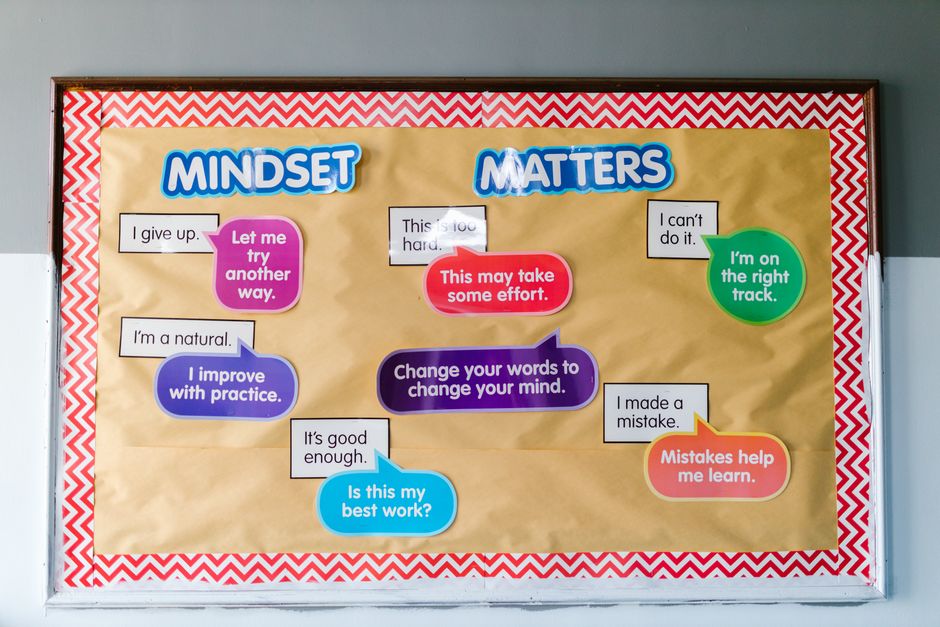
Every challenge is a chance to expand your capabilities. When you encounter something difficult, instead of thinking “This is too hard,” train yourself to think “This is a perfect chance to grow.”
Practice this reframe daily. Got assigned a project outside your expertise? Perfect opportunity to build new skills. Struggling with a relationship issue? Great chance to develop better communication.
The magic is in the perspective shift. The situation doesn’t change, but your response to it does.
Step 3: Replace “I Can’t” with “I Can’t YET”
This one word changes everything. “Yet” implies that ability is a journey, not a destination. It acknowledges where you are while pointing toward where you can go.
Start catching yourself. When you think or say “I can’t,” add “yet” to the end. “I can’t code… yet.” “I can’t run a marathon… yet.” “I can’t speak confidently in meetings… yet.”
This simple addition rewires your brain to see current limitations as temporary rather than permanent.
Step 4: Celebrate Effort Over Outcomes
In a growth mindset, the process matters more than the immediate result. Start praising yourself (and others) for effort, strategy, and persistence rather than just outcomes.
Instead of “I’m so smart for getting this right,” try “I used effective strategies and worked really hard.” Instead of “I’m terrible at this because I failed,” think “I tried a new approach and learned what doesn’t work.”
This shift removes the fear of failure because value comes from the trying, not just the succeeding.
Step 5: Seek Feedback and Learn from Failures
Feedback is growth fuel. Start actively requesting input on your work. When you receive criticism, resist the urge to defend yourself. Instead, ask questions: “Can you tell me more about that?” or “What specifically could I improve?”
When you fail, conduct a learning review. What went wrong? What did you learn? What would you do differently? What unexpected insights did you gain? Every setback contains valuable data if you’re willing to extract it.
Overcoming Common Challenges
As you develop a growth mindset, you’ll face predictable obstacles. Here’s how to handle them:
“I’ve Always Been This Way”
This is the fixed mindset talking about mindset itself! The truth is, personality and behavior patterns can absolutely change. Brain plasticity research proves it. You’re not locked into who you’ve been.
Start small. Pick one area to apply growth mindset thinking. You don’t need to transform overnight. Even Carol Dweck admits she catches herself in fixed mindset thinking. The goal isn’t perfection; it’s progress.
“Talent Matters More Than Effort”
Talent is just a starting point. Yes, people have different natural aptitudes. But research shows that deliberate practice and effort account for far more of the variance in achievement than innate ability.
Think of Mozart. Everyone cites him as a “natural genius.” But what gets overlooked is that he practiced intensively from age three, received expert coaching, and worked incredibly hard. Talent and effort aren’t opposites; the most successful people combine both.
“Growth Mindset Feels Unrealistic”
Growth mindset isn’t about blind optimism. It’s not pretending you can do anything instantly or denying real limitations. It’s about understanding that your capabilities can expand through focused effort and effective strategies.
You won’t become an Olympic athlete at 50 if you’ve never trained. But you can definitely become stronger, faster, and healthier than you are now. Growth mindset is about expanding your current limits, not denying they exist.
“How Do I Teach This to My Kids?”
Model it first. Children learn more from what you do than what you say. Let them see you struggle, make mistakes, and persist. Talk about your own learning process. Share your failures and what you learned from them.
Use growth mindset language. Instead of “You’re so smart,” try “You worked really hard on that.” Instead of “You’re a natural artist,” say “Your practice is really paying off.” Praise the process, not just the person.
Your Free Growth Mindset Guide
Ready to dive deeper? We’ve created a comprehensive guide that takes everything you’ve learned here and expands it into actionable strategies you can apply immediately.
Inside your free PDF guide, you’ll discover:
- The Revolutionary Discovery of the two mindsets and the neuroscience behind brain plasticity
- Deep Dives into how mindsets shape reality and outcomes in specific areas of life
- Practical Applications for education, business, career advancement, and leadership
- Relationship Strategies including parenting with a growth mindset approach
- Advanced Techniques for overcoming fixed mindset triggers that keep you stuck
- The Power of Language and how changing your words literally changes your brain
- Creating Growth Cultures in your workplace, family, and community
This guide is perfect for:
- Anyone feeling stuck in their personal or professional development
- Parents wanting to raise resilient, motivated children
- Leaders building high-performing teams
- Educators transforming how students approach learning
- Anyone ready to unlock their true potential
You’ll discover inside: 12 detailed chapters based on Carol Dweck’s groundbreaking research, complete with real-world examples, self-assessment tools, and step-by-step implementation guides. This isn’t just theory. It’s a practical blueprint for transformation.
View your Book free download PDF
Your Mindset, Your Future
The difference between where you are and where you want to be often comes down to a single shift: believing that you can change, grow, and develop through effort and learning.
You don’t need to be perfect. You don’t need to transform overnight. You just need to start viewing challenges as opportunities, effort as the path to mastery, and setbacks as valuable feedback.
Your brain is designed to grow. Your abilities are not fixed. Your potential is far greater than you imagine. The question isn’t whether you can develop a growth mindset. It’s whether you’ll choose to start today.
Download your free guide now and begin your transformation.
View your Book free download PDF
What’s one area of your life where you’re ready to shift from “I can’t” to “I can’t yet”? Share in the comments below.
📧 Get More Insights Like This
Join thousands of readers who receive evidence-based personal development tips directly in their inbox.
🌟 Start Your Transformation Today
Ready to take the next step in your personal development journey?
Learn More About Us Browse All Articles